 Asma v
Tudor vs Rolex Watches: Two Distinct Ideas of Luxury
Tudor vs Rolex watches occupy the same luxury-watch conversation, yet rolex and tudor watches create very different impressions on the wrist: rolex tudor watch leans into relaxed sporting character and vintage codes, while the other carries a more established language of precision, polish, and enduring status.
The relationship between the two brands makes the comparison especially intriguing. Tudor was created through the wider Rolex legacy, but it has developed a visual identity, movement portfolio, and collector culture of its own.
The result is not simply a question of choosing a less expensive Rolex. It is a question of which watch belongs more naturally to your wardrobe, your wrist, and the way you want to feel.
Inside The Comparison of Rolex and Tudor Watches
- How Tudor and Rolex are connected
- Where their design languages separate
- How the two brands compare on the wrist
- Rolex and Tudor watches to consider
- How to choose by wardrobe, jewelry, proportion, and personal style
Rolex and Tudor Watches at a Glance
Tudor vs Rolex Watches
 Sporting, vintage-inspired luxury
Tudor
|
VS |
 Iconic, established luxury
Rolex
|
|---|---|---|
|
Rooted in the Rolex story with its own modern identity
|
Heritage |
One of the most established names in Swiss watchmaking
|
|
Sporting, vintage references, strong brushed surfaces
|
Design language |
Refined Oyster architecture with highly recognizable signatures
|
|
Often relaxed, substantial, and tool-watch inspired
|
Wrist presence |
Ranges from understated to highly recognizable
|
|
Modern mechanical movements with a strong value proposition
|
Movement approach |
Proprietary mechanical movements and extensive technical development
|
|
Denim, knitwear, tailoring, casual luxury
|
Wardrobe mood |
Tailoring, dresses, elevated basics, jewelry-led dressing
|
|
Distinctive among watch enthusiasts and increasingly recognizable
|
Brand recognition |
Exceptionally recognizable beyond watch circles
|
| Quick View | Quick View |
What Separates Tudor Rolex Watches
Why Are Tudor and Rolex Connected?
The Tudor story begins with Hans Wilsdorf, the founder of Rolex. Tudor was developed as a separate watch brand within the wider Wilsdorf enterprise, allowing the company to create watches with a different positioning while drawing upon the reputation and technical foundation associated with Rolex.
That history is the reason phrases such as tudor watches by rolex continue to appear in search conversations. But the shorthand can obscure an important distinction: Tudor is its own Swiss watch brand, with its own collections, designs, movements, references, and identity.
Interesting Facts About Tudor and Rolex
Tudor — Interesting Facts
The Tudor name was registered in 1926 on behalf of Hans Wilsdorf, the founder of Rolex. His idea was to create a watch with Rolex-backed reliability at a more accessible price.
In 1946, Montres Tudor S.A. was established. Rolex continued to support the brand’s technical, aesthetic, and functional standards during its early years.
Here’s a surprising detail: some early Tudor watches actually carried the Rolex name on their dials. It was part of Tudor’s early connection to its parent company.
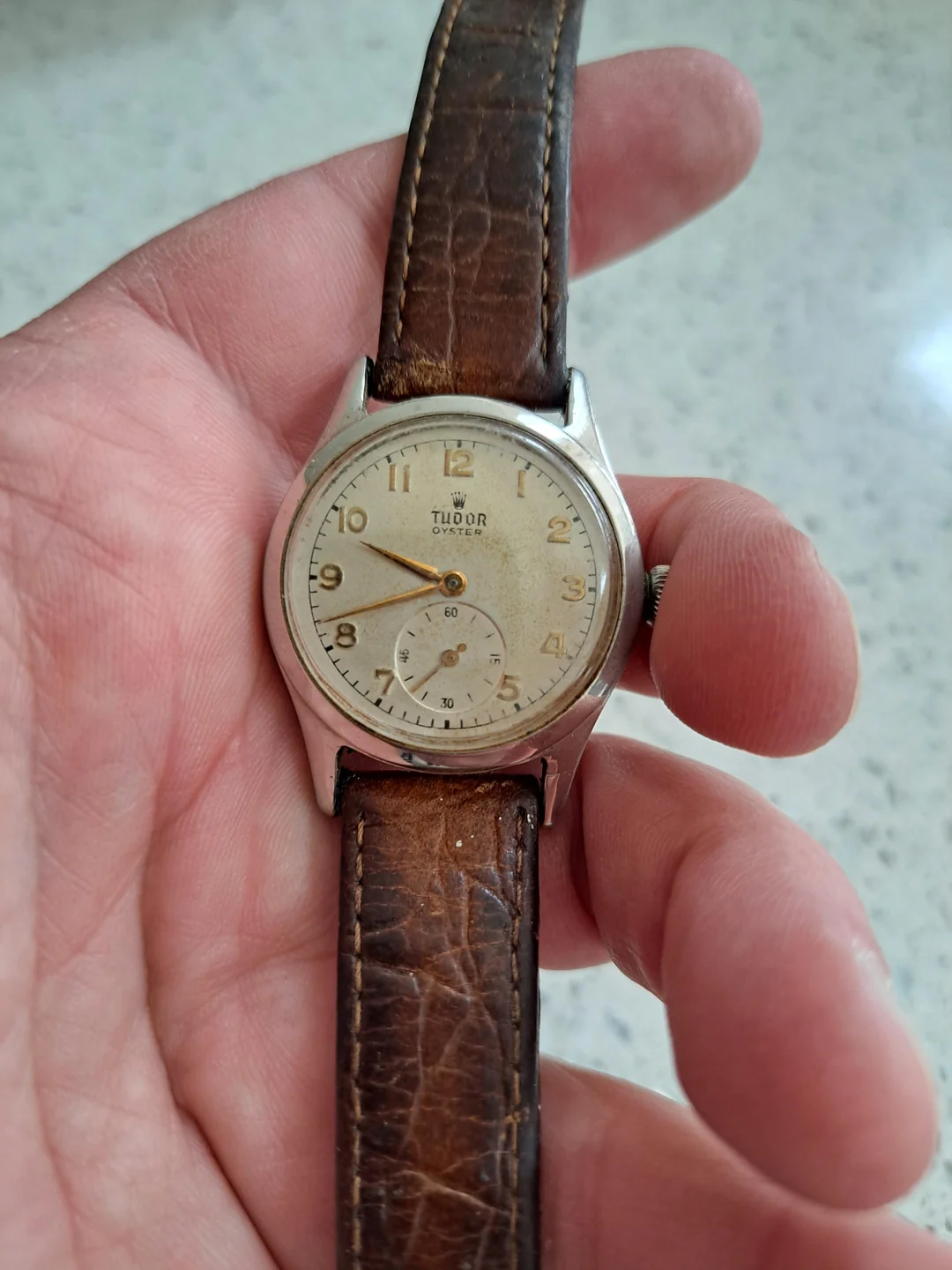
In 1952, Tudor Oyster Prince watches accompanied the British North Greenland Expedition. Thirty watches made the journey between 1952 and 1954, helping establish Tudor’s reputation for rugged adventure watches.
Tudor’s 1926 collection takes its name from the year the Tudor trademark was registered. The collection is available in 28, 36, 39, and 41mm sizes.
Tudor also has a deep diving history. Its first Tudor diver, the Oyster Prince Submariner reference 7922, appeared in 1954.
Rolex — Interesting Facts
Hans Wilsdorf founded his London-based timepiece distribution company in 1905, when he was just 24 years old.
In 1926, Rolex introduced the Oyster, one of the world’s first waterproof wristwatch cases. Its patented hermetically sealed construction and screw-down crown helped keep water out and protect the movement.
A year later, Rolex put that claim to the test. Professional swimmer Mercedes Gleitze wore a Rolex Oyster during her English Channel swim in 1927. After roughly 10 hours in the water, the watch was still running, giving Rolex a powerful real-world demonstration of its water resistance.
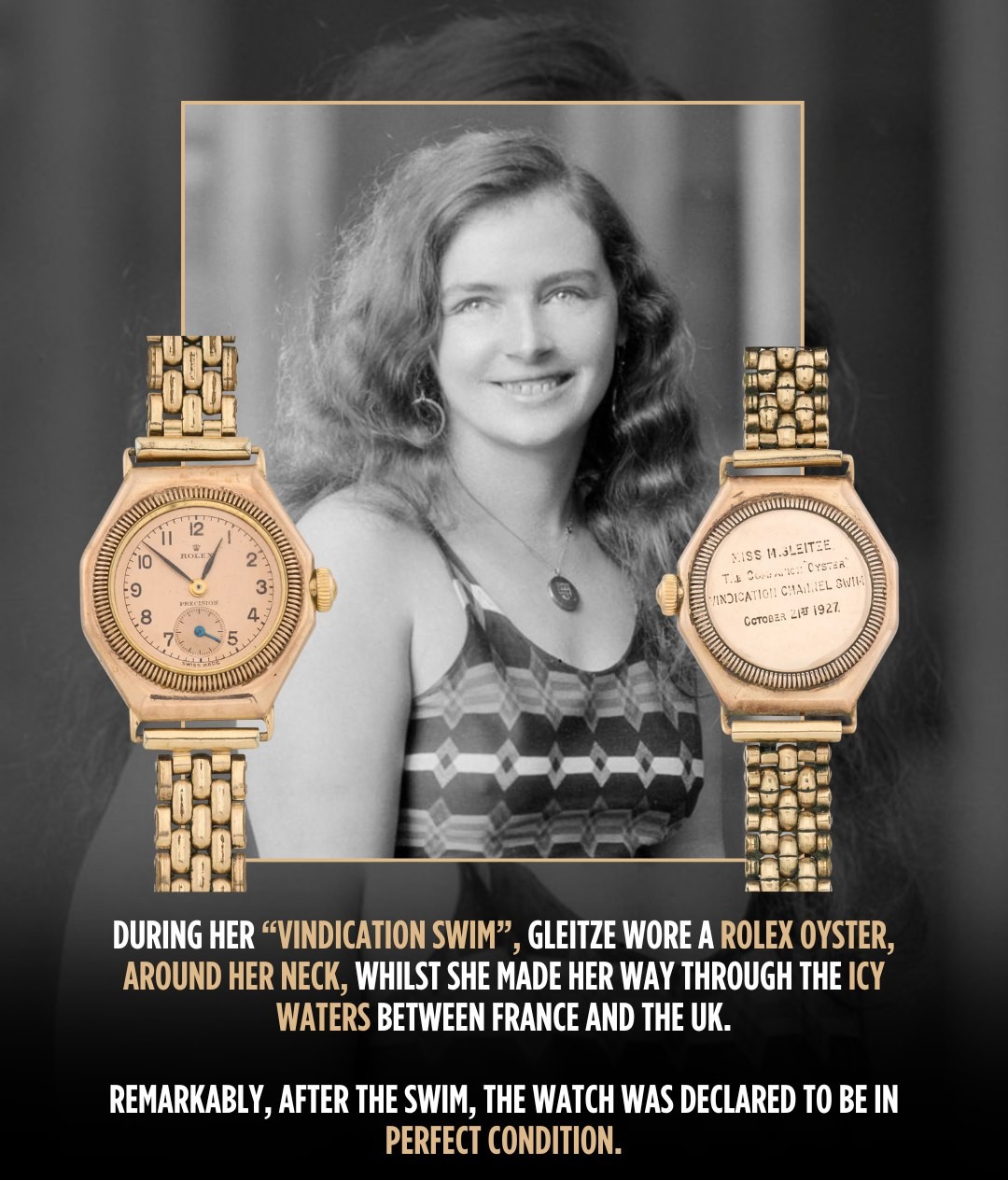
Four years later, Rolex introduced its Perpetual self-winding system. The rotor could wind the movement as the wearer moved their wrist.
The Datejust arrived in 1945, becoming the first Rolex wristwatch to display the date through an aperture at 3 o’clock. The occasion also introduced the Jubilee bracelet.
The Tudor and Rolex Connection
Tudor and Rolex share the same historical DNA through Hans Wilsdorf, but their identities developed in different directions.
Rolex became closely associated with technical innovation, instantly recognizable designs, and enduring luxury.
Tudor developed a more adventurous character, drawing heavily from its diving, military, and vintage-inspired watchmaking history.
Are Tudor Watches Made by Rolex?
Tudor and Rolex share corporate history, but a Tudor watch should not be understood simply as a Rolex with a different name on the dial. Tudor has developed into its own product language, particularly through collections such as Royal, Black Bay, and Pelagos.
Think of Tudor as a sister brand within the Rolex legacy rather than a Rolex watch wearing a different badge. The connection explains part of Tudor’s heritage; the watch itself determines its identity.
What Makes Rolex Rolex?
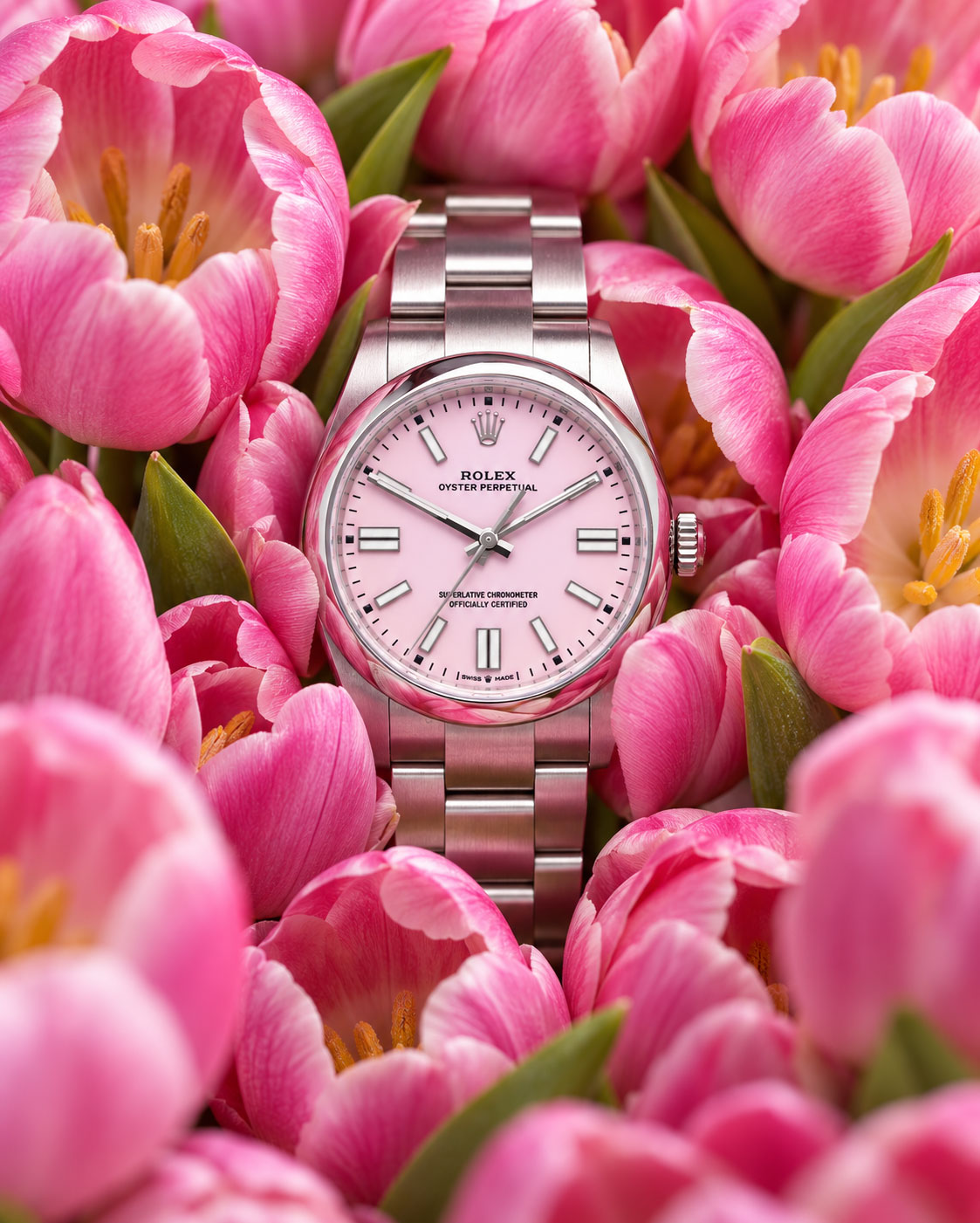
Rolex has something few watch houses can manufacture deliberately: immediate visual recognition. An Oyster case, a fluted bezel, a familiar bracelet, a distinctive date display, or the proportions of a classic Rolex can identify the brand before the wearer has said a word.
That recognition is part of Rolex’s cultural power. The brand has lived comfortably alongside tailoring, business dressing, sport, cinema, travel, and generations of inherited luxury. Its strongest designs do not need a seasonal fashion moment to feel relevant.
The collection also spans remarkably different moods. An Oyster Perpetual can be pared back and modern; a Datejust can move between jewelry and everyday dressing; and smaller women’s configurations can feel closer to fine jewelry than to a traditional sports watch.
What Makes Tudor Different?
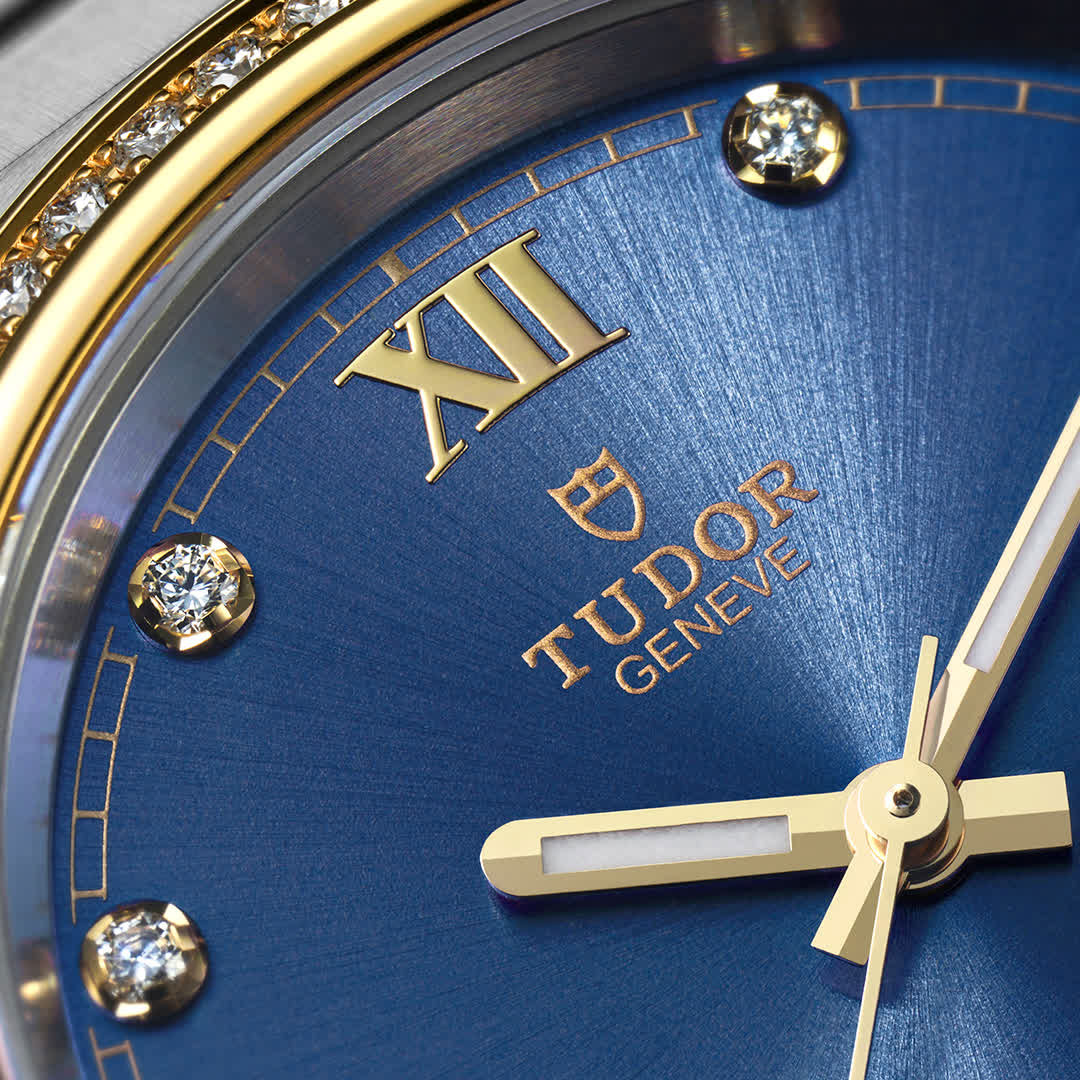
Tudor’s strongest designs often feel as though they have spent time in an archive. Vintage references, substantial cases, contrasting finishes, distinctive bezels, and practical complications give the brand a character that feels less formal than Rolex.
The Royal collection adds another side to Tudor. Rather than leaning exclusively into the tool-watch aesthetic associated with Black Bay or Pelagos, Royal models bring integrated-bracelet styling, polished details, and a more jewelry-conscious character to the brand.
That makes the Royal particularly relevant to a women’s luxury-watch comparison. The 28mm and 34mm examples in this edit show how Tudor can move into a more refined, everyday space without losing its own identity.
How Tudor and Rolex Look on the Wrist
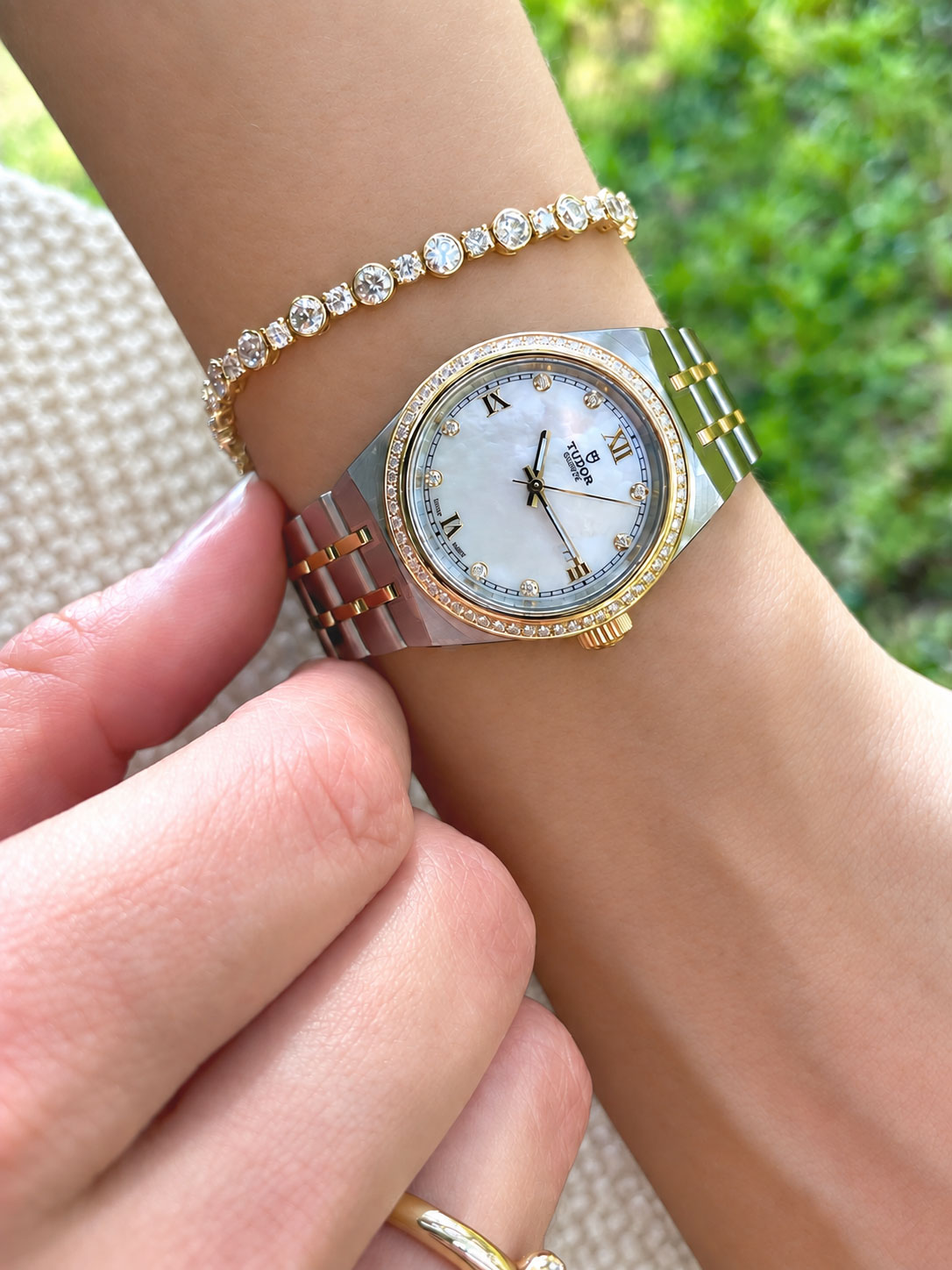

Diameter tells only part of the story. Two watches with similar measurements can feel entirely different once case thickness, lug shape, bezel width, dial opening, bracelet architecture, and finishing enter the picture.
A 26mm Rolex Datejust creates a very different visual rhythm from a 41mm Oyster Perpetual. Likewise, a 28mm Tudor Royal has a much more delicate presence than a 34mm Royal. Case diameter changes the watch’s relationship with the wrist, but bracelet width and overall silhouette complete the picture.
26mm, 28mm, 34mm or 41mm?
Smaller cases can create a deliberately delicate, vintage, or jewelry-like effect, while larger cases introduce more visual authority. Neither approach belongs exclusively to one type of wearer. The question is how much presence you want the watch to have within the rest of the outfit.
A 26mm or 28mm watch can slip elegantly beneath a shirt cuff and sit comfortably beside fine bracelets and rings. A 34mm watch creates more presence without becoming visually dominant. A 41mm watch becomes an accessory in its own right, particularly when paired with a simple wardrobe.
What Is Different Under the Dial?
Both brands build serious mechanical watches, but their movement strategies reflect their respective positions. Tudor has developed a broad range of mechanical movements for its collections, while Rolex has built an extensive proprietary movement ecosystem supported by decades of technical development and manufacturing expertise.
For the wearer, the distinction becomes practical over time. Accuracy, power reserve, robustness, water resistance, servicing, and complication design all matter when a watch is expected to become part of daily life.
The meaningful comparison is therefore between specific watches rather than logos alone. A compact Tudor Royal and a Rolex Lady-Datejust are both luxury mechanical watches, but their proportions, design language, finishing, and intended visual effect are notably different.
Tudor Royal vs Rolex Datejust
Tudor Royal vs Rolex Datejust
 Compact two-tone everyday luxury
Tudor Royal 28mm
|
VS |
 Rolex Datejust 79163 Mother Of Pearl Dial 18k Rose Gold Stainless Steel Women's Wristwatch 26 mm
|
|---|---|---|
|
28mm
|
Case size |
26mm
|
|
Stainless steel with yellow gold accents
|
Material |
Stainless steel with 18K rose gold
|
|
Straightforward everyday design with date display
|
Dial character |
Mother-of-pearl dial with shifting color and decorative character
|
|
Polished, versatile, contemporary
|
Style mood |
Elegant, jewelry-oriented, classic
|
|
Everyday tailoring, knitwear, shirts, casual dressing
|
Wardrobe pairing |
Dresses, tailoring, elevated basics, jewelry-led dressing
|
| Quick View | Quick View |
The Tudor Royal 28mm and Rolex Datejust 26mm sit close enough in scale to make the differences particularly interesting. The Tudor brings yellow-gold accents into a stainless-steel design, while the Rolex introduces 18K rose gold and a mother-of-pearl dial that shifts subtly with the light.
Stylistically, the Tudor feels more straightforward and versatile. The Rolex feels closer to fine jewelry, especially when the mother-of-pearl dial catches daylight. With a white shirt and understated gold jewelry, the Rolex can become part of the jewelry story; with knitwear or relaxed tailoring, the Tudor’s cleaner character can feel effortless.
Tudor Claire de Rose vs Rolex Lady-Datejust
Tudor Claire de Rose vs Rolex Lady-Datejust
|
Delicate Tudor styling
Tudor Claire de Rose 26mm
|
VS |
Refined Rolex classic
Rolex Lady-Datejust 28mm
|
|---|---|---|
|
26mm
|
Case size |
28mm
|
|
Stainless steel
|
Material |
Stainless steel with 18K white gold accents
|
|
Diamond hour markers with subtle decorative detail
|
Dial character |
Silver dial with a restrained classic appearance
|
|
Delicate, understated, feminine
|
Style mood |
Timeless, polished, sophisticated
|
|
Daily wear and refined casual dressing
|
Styling range |
Everyday wear through special occasions
|
| Quick View | Quick View |
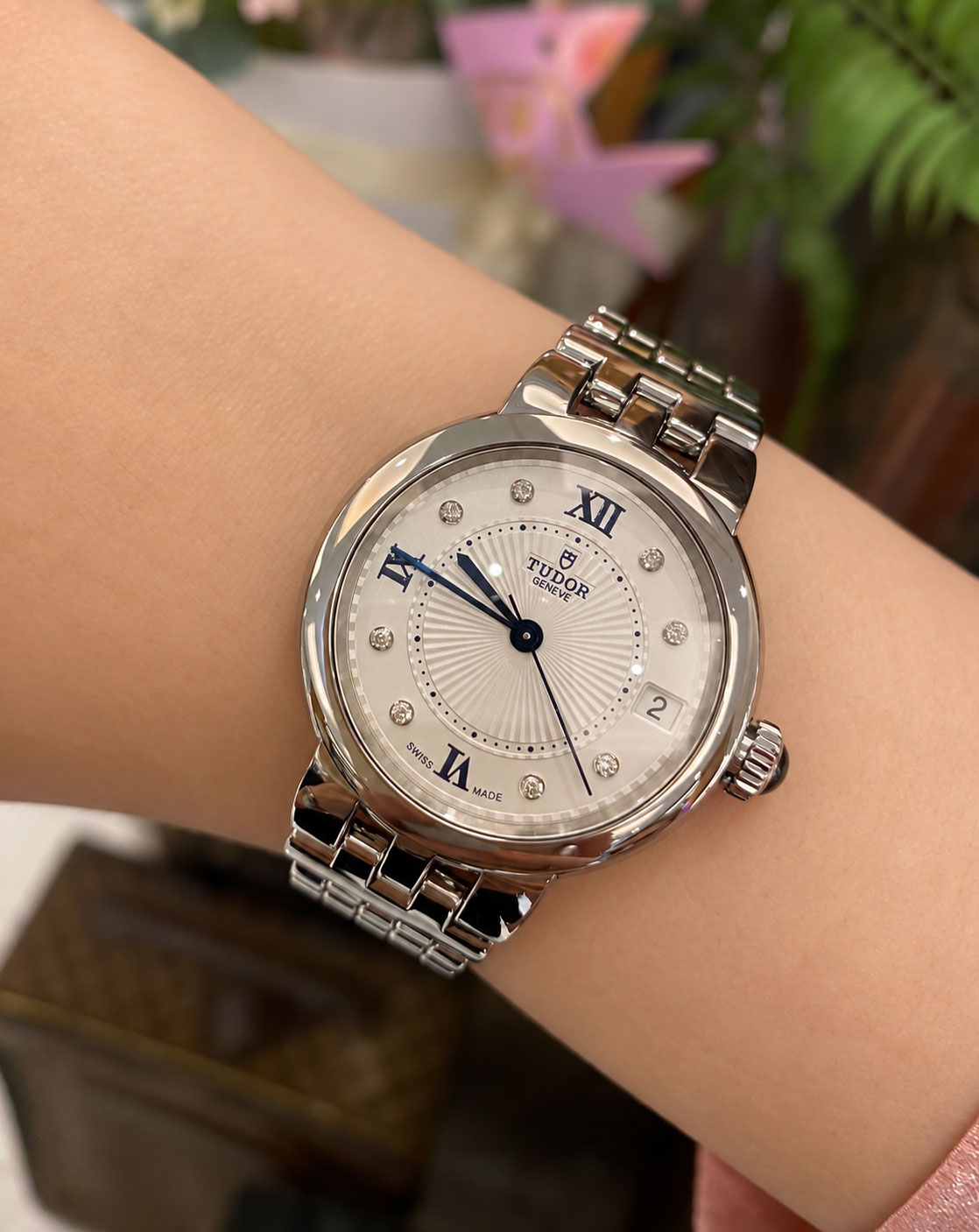
The Claire de Rose takes Tudor into a noticeably delicate direction. At 26mm, with diamond hour markers and a stainless-steel case, it has the visual intimacy of a smaller jewelry watch while retaining the brand’s mechanical character.
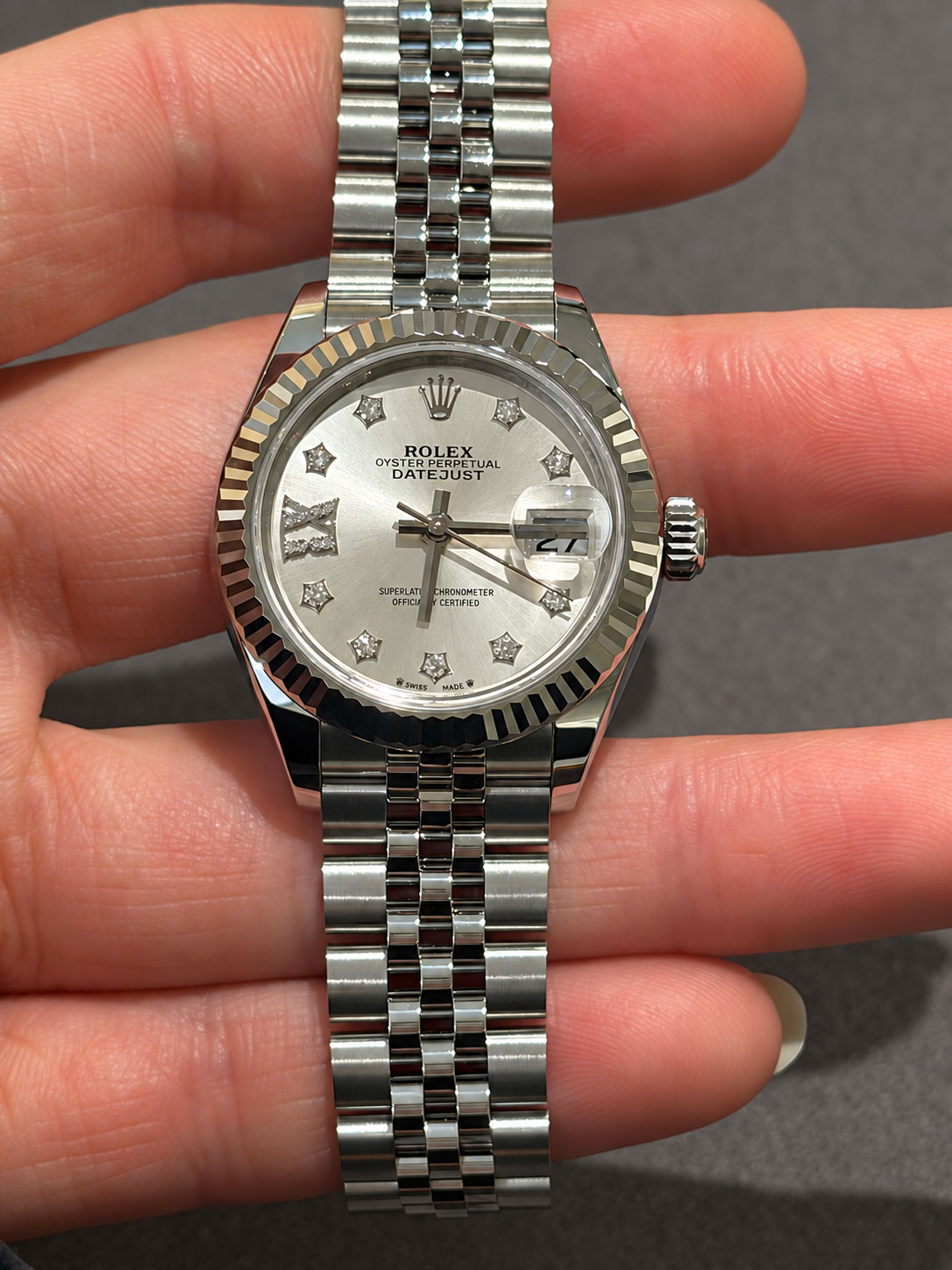
The 28mm Rolex Lady-Datejust moves in a more traditionally polished direction. Its silver dial and 18K white-gold accents create a cooler visual effect, making it particularly easy to place beside white gold, platinum, silver, or diamond jewelry.
Tudor Royal 34 vs Rolex Oyster Perpetual 41
Tudor Royal 34 vs Rolex Oyster Perpetual 41
 Compact statement watch
Tudor Royal 34mm
|
VS |
 Bold modern everyday watch
Rolex Oyster Perpetual 41mm
|
|---|---|---|
|
34mm
|
Case size |
41mm
|
|
Black diamond dial
|
Dial character |
Candy pink dial
|
|
Integrated-style Royal bracelet architecture
|
Bracelet impression |
Classic Oyster bracelet
|
|
Noticeable but compact
|
Wrist presence |
Bold and unmistakable
|
|
Refined casual, tailoring, evening separates
|
Wardrobe mood |
Minimal dressing, modern tailoring, monochrome wardrobes
|
| Quick View | Quick View |
This is where the numbers become visually important. At 34mm, the Tudor Royal sits in a compact middle ground, while the 41mm Oyster Perpetual becomes a much stronger focal point. The difference is not subtle: the Rolex asks to be seen.
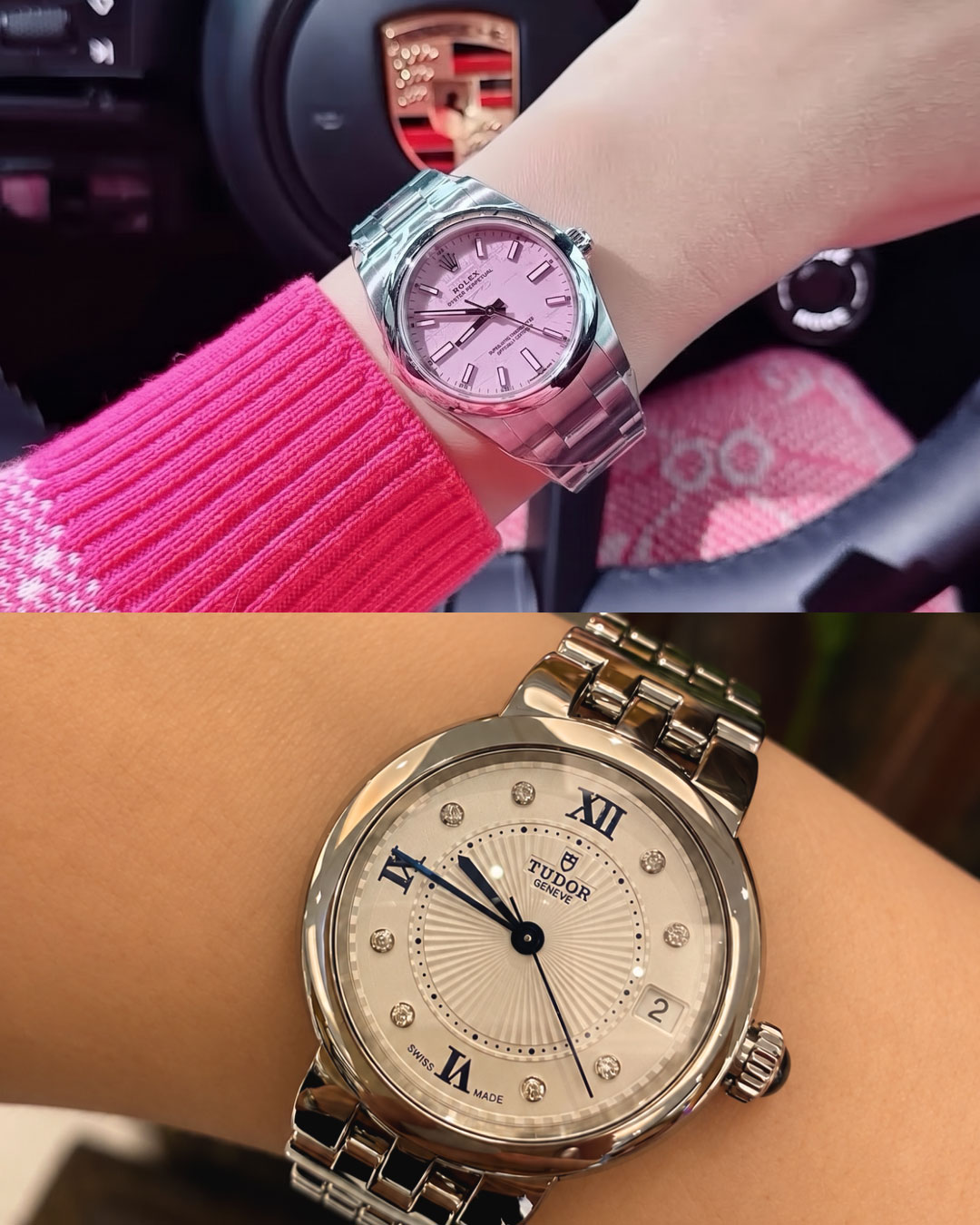
The candy-pink dial intensifies that effect. Against a pared-back wardrobe—black tailoring, white shirting, cream knitwear—the color can function almost like a piece of fine jewelry. The Tudor Royal’s black diamond dial takes a quieter but still decorative route.
Tudor vs Rolex Watches for Women
Women’s watch styling has moved well beyond the old division between “ladies’ watches” and men’s watches. Case proportion, bracelet architecture, dial color, metal, and the relationship between the watch and the rest of the jewelry now matter more than the label attached to the collection.
Tudor can be compelling on a woman who likes the tension between a substantial watch and a refined wardrobe. The Royal collection shows another side of the brand, with compact cases, decorative dials, and bracelet architecture that can move comfortably into polished everyday dressing.
Rolex offers a broader jewelry vocabulary. The Datejust and Lady-Datejust configurations can move toward delicate, classic, or jewelry-like territory, while the Oyster Perpetual demonstrates how a women’s wardrobe can also embrace a much larger, more expressive case.
Tudor Rolex Ladies Watch: What Size and Style Works?
The phrase tudor rolex ladies watch often reflects a search for a women’s luxury watch that combines the heritage associated with Rolex and the more relaxed appeal of Tudor. In practice, the more useful question is which case, bracelet, dial, and metal create the right relationship with your personal style.
Choose by the Way You Dress
-
For a delicate jewelry wardrobe
A 26mm or 28mm case can sit naturally beside fine bracelets, rings, diamond studs, and delicate chains. The Claire de Rose and smaller Datejust configurations demonstrate this more intimate approach.
Look forSmaller case proportions, refined dials, and metal that works naturally beside existing jewelry.AvoidAssuming a smaller watch is automatically more elegant. -
For two-tone jewelry
The Tudor Royal with yellow-gold accents can create a natural bridge between steel and warm gold jewelry, making it useful for wardrobes that already mix metals.
Look forYellow-gold earrings, mixed-metal bracelets, or warm-toned accessories that echo the watch subtly.AvoidTrying to match every piece of jewelry exactly. -
For cool-toned jewelry
The Rolex Lady-Datejust’s stainless steel and 18K white-gold accents create a cooler visual effect that can sit comfortably beside silver, white gold, platinum, and diamond jewelry.
Look forCool metals and crisp neutrals that allow the watch's polished character to show.AvoidTreating undertone as a rigid restriction. -
For a statement watch
The 41mm candy-pink Oyster Perpetual changes the role of the watch completely. It becomes a visible styling element rather than a quiet finishing detail.
Look forSimple clothing, clean tailoring, and restrained accessories that give the dial room to speak.AvoidLayering too many competing statement accessories. -
For everyday versatility
A moderate case and straightforward dial can move easily from workwear to weekends. The Tudor Royal 28mm is particularly suited to this more understated approach.
Look forA case size that works beneath cuffs and alongside the jewelry you already wear.AvoidBuying solely for the logo without considering how frequently you will actually wear it.
The Vieuv Style Code: Tudor or Rolex?
If your wardrobe is tailored: A clean Rolex silhouette can echo the precision of a blazer, trousers, or crisp shirting. Tudor can create more deliberate contrast, particularly when a sportier case meets polished tailoring.
If you prefer quiet jewelry: The Tudor Claire de Rose 26mm offers a smaller, more intimate presence. Its diamond hour markers add light without turning the watch into the entire focus of the outfit.
If you wear yellow gold: The Tudor Royal 28mm’s yellow-gold accents can create a warm connection with gold earrings, rings, or bracelets while the stainless-steel foundation keeps the effect versatile.
If you prefer white metals: The Rolex Lady-Datejust’s white-gold accents and silver dial can create a particularly cohesive relationship with white gold, platinum, silver, and diamonds.
If you want color: The candy-pink Rolex Oyster Perpetual makes the dial the visual event. It works especially well when the rest of the outfit is deliberately restrained.
If you like darker, more dramatic details: The Tudor Royal 34mm with its black diamond dial brings depth and sparkle without requiring a bright dial or an oversized case.
Is Tudor More Affordable Than Rolex?
Tudor generally occupies a lower price position than Rolex, and the six watches in this edit make that difference visible. The Tudor examples listed here range from $2,446 to $5,124, while the Rolex examples range from $11,783 to $15,228 based on the supplied U.S. listings.
But price alone does not explain the distinction. Materials, complications, movement development, finishing, collection history, production strategy, market demand, and brand positioning all influence the price of an individual watch.
A meaningful comparison should place watches with similar intended uses and proportions beside one another. A compact Tudor Royal and a Rolex Lady-Datejust tell a more useful story together than a professional Tudor diver and a jewelry-focused Rolex.
Rolex and Tudor Watches to Consider
This 28mm Tudor Royal combines yellow-gold accents with stainless steel for a balanced, versatile design. Its notched bezel and date display give the watch practical everyday character while keeping the silhouette polished.
The Tudor Claire de Rose 35200 pairs a 26mm stainless-steel case with diamond hour markers and an automatic movement. Its compact proportions and subtle decorative details give it a refined presence for everyday wear.
The 34mm Tudor Royal brings together a black diamond dial, stainless steel, a notched bezel, and an automatic movement. The darker dial gives the compact case a more dramatic jewelry-like character.
The 26mm Rolex Datejust 79163 combines stainless steel with 18K rose gold and a mother-of-pearl dial. As the dial catches changing light, the watch moves naturally between jewelry, everyday dressing, and polished casual style.
The 41mm Rolex Oyster Perpetual makes its presence through scale and color. Its candy-pink dial brings a vivid focal point to the classic Oystersteel case and Oyster bracelet, creating a confident modern statement.
The Rolex Lady-Datejust combines stainless steel with 18K white-gold accents and a silver dial. Its 28mm proportions create a refined everyday silhouette that can transition naturally into special-occasion dressing.
How These Watches Translate Into Style
The Tudor Royal 28mm: This is the easy middle ground. Yellow-gold accents give it warmth, while stainless steel keeps the overall effect practical. Think cream knitwear, a white shirt, dark denim, loafers, and understated gold jewelry.
The Tudor Claire de Rose 26mm: Its smaller scale and diamond hour markers lend themselves to a delicate jewelry wardrobe. It can sit beautifully beside a slim bracelet or diamond studs without demanding the entire wrist.
The Tudor Royal 34mm: The black diamond dial gives this watch more visual depth. It is particularly interesting with monochrome clothing, black tailoring, charcoal knitwear, leather accessories, or evening separates.
The Rolex Datejust 26mm: Mother-of-pearl introduces movement and luminosity. The rose-gold element adds warmth, making it an especially natural companion to gold jewelry and softly colored wardrobes.
The Rolex Oyster Perpetual 41mm: This is the statement piece of the six. The candy-pink dial becomes the color story, so the most effective styling approach is often to keep the surrounding outfit clean and architectural.
The Rolex Lady-Datejust 28mm: Silver and white gold create a cooler, more restrained composition. It works naturally with crisp shirting, tailored separates, diamonds, silver-toned accessories, and evening dressing.
How to Choose Without Chasing the Logo
Five Questions Worth Asking
A luxury watch earns its place through frequency and pleasure of wear, not simply the prestige of its name.
Case diameter, thickness, bracelet width, and overall silhouette determine how the watch occupies the wrist.
Your watch does not exist in isolation. Earrings, rings, bracelets, and metal tones can change the overall impression.
Tudor and Rolex both offer different visual moods, from practical sporting character to refined jewelry-led design.
A 26mm watch can act almost like jewelry, while a 41mm watch can become the focal point of an outfit.
The Difference You Feel After a Month
After the novelty disappears, the distinction between Tudor and Rolex becomes less about the specifications on a product page and more about how naturally the watch enters your life.
A Tudor can feel like an object with texture and attitude: something you notice against a wool coat, a denim cuff, or the grain of a leather bag. The smaller Royal and Claire de Rose models show that Tudor can also move into a much more delicate register.
Rolex can feel more like an established piece of personal architecture. A mother-of-pearl Datejust can become part of a jewelry story; a silver-dial Lady-Datejust can disappear elegantly beneath a cuff; and a candy-pink Oyster Perpetual can become the color punctuation of an otherwise restrained outfit.
Tudor vs Rolex Watches FAQ
Tudor vs Rolex Questions
Is Tudor owned by Rolex?
Tudor was established by Hans Wilsdorf within the wider company structure associated with Rolex. It operates as its own Swiss watch brand with its own collections and identity.
Are Tudor watches made by Rolex?
Tudor should not be understood as simply a Rolex watch made under another name. It is a distinct brand with its own watches and movement portfolio, although its history is closely connected to Rolex.
Is Tudor considered a luxury watch brand?
Yes. Tudor occupies the Swiss luxury mechanical-watch segment and has developed a substantial identity of its own.
Why is Tudor cheaper than Rolex?
Tudor generally occupies a lower market position than Rolex. The brands differ in manufacturing strategy, materials, movement development, finishing, collection history, positioning, and market demand.
What is the difference between Tudor and Rolex?
The biggest differences are brand positioning, design language, cultural recognition, collection architecture, and wrist character. Tudor generally emphasizes sporting and vintage-inspired design, while Rolex has a broader and more established luxury vocabulary.
Is Tudor a good alternative to Rolex?
Tudor can be considered alongside Rolex when the reader wants Swiss mechanical luxury with a different design language and market position. It is more useful to think of the brands as related but distinct rather than treating Tudor as a replica of Rolex.
Are Tudor watches good for women?
Yes. Tudor’s women’s and unisex models can work across delicate, classic, sporting, and statement-oriented wardrobes depending on case size, metal, dial, and bracelet.
Which Rolex is best for women?
There is no single model that suits every woman. Datejust, Lady-Datejust, Oyster Perpetual, and other Rolex configurations create different effects depending on case proportion, metal, dial, bracelet, jewelry, and wardrobe.
What does Tudor watches by Rolex mean?
The phrase usually refers to Tudor’s historical relationship with the Rolex organization and Hans Wilsdorf. It does not mean that every Tudor watch is simply a Rolex watch with a Tudor dial.
What is a Tudor Rolex watch?
People sometimes use the phrase Tudor Rolex watch to describe the historical connection between the two brands. A Tudor watch remains a Tudor product, while a Rolex watch remains a Rolex product.
Which Tudor watch is closest to a Rolex Datejust?
The Tudor Royal is a useful comparison for readers interested in a refined everyday Tudor with a more polished bracelet-oriented design, although the collections remain distinct.
Can you wear Rolex and Tudor watches with fine jewelry?
Absolutely. The key considerations are proportion, metal, color, and visual balance. A smaller Tudor or Rolex can integrate quietly with fine jewelry, while a larger watch can provide deliberate contrast.
What size Rolex is good for a smaller wrist?
Smaller Rolex configurations can create a more delicate visual effect, but wrist proportion, case thickness, bracelet width, and personal preference matter more than diameter alone.
Is a 41mm Rolex too large for women?
Not necessarily. A 41mm watch creates a strong visual presence and can work intentionally as a statement accessory. The Oyster Perpetual 41, for example, uses its larger scale and candy-pink dial as part of its visual identity.
The Vieuv Take
The most revealing question is not which logo carries more weight, but which watch makes sense when you picture yourself wearing it repeatedly. Imagine the case against your favorite coat, the bracelet beside your everyday jewelry, the dial beneath a cuff, and the watch six months after the purchase has stopped feeling new.
If the image is relaxed, textured, sporting, and slightly archival, Tudor’s design language may feel naturally aligned with your wardrobe. If the image is polished, classic, jewelry-conscious, or rooted in the unmistakable codes of established luxury, Rolex may speak more directly to the way you dress.
Two Ways to Wear These Tudor Rolex Watches
- Tudor brings sporting character, vintage references, and a more relaxed luxury vocabulary.
- Rolex brings a broader language of established luxury, recognition, and jewelry-oriented design.
- Case size, metal, dial, bracelet, and wardrobe can matter as much as the brand name.
–
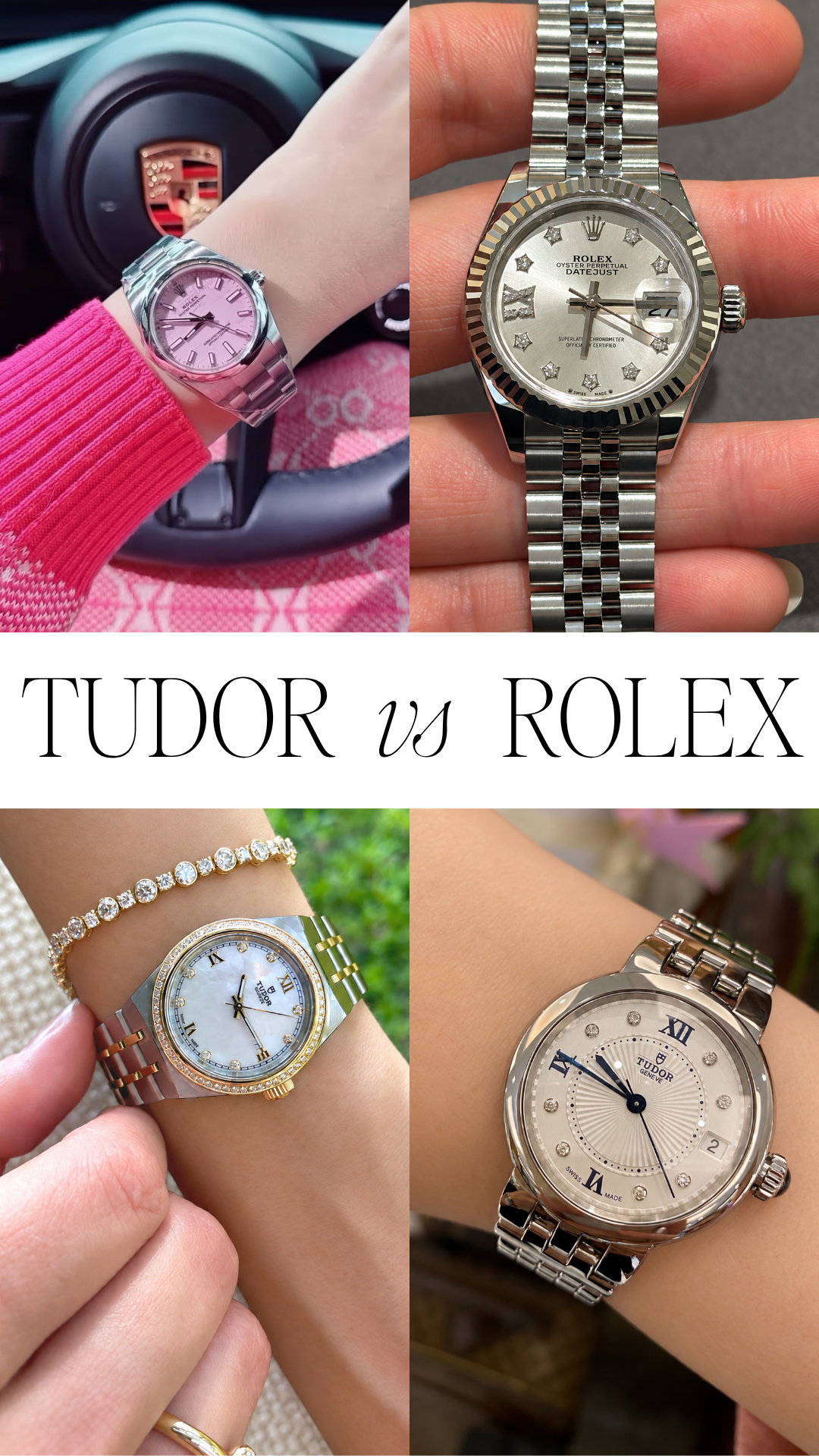
The appeal of rolex and tudor watches lies precisely in how differently the two brands interpret luxury.
A thoughtful tudor vs rolex watches comparison reveals that tudor rolex watches are not interchangeable: Tudor can bring relaxed sporting character, archival warmth, or delicate Royal styling, while Rolex can introduce a more established and polished presence.
That distinction also matters when searching for a tudor rolex ladies watch, considering a rolex tudor watch for everyday dressing, or researching a tudor rolex watch through the broader idea of tudor watches by rolex.
With six distinct models—from compact Tudor Royal and Claire de Rose watches to the mother-of-pearl Rolex Datejust, candy-pink Oyster Perpetual, and Lady-Datejust—the most useful decision comes down to proportion, metal, dial, jewelry, wardrobe, and the way you want your luxury watch to live on the wrist.